
Getting Braces On: A Step-by-Step Walkthrough
Published November 18, 2026Getting braces on comes with plenty of questions. Will the brackets hurt going on, how strange will they feel, and should you plan on soup for dinner? Even when you’re excited to start, you probably want a better preview than “you’ll get used to them.”
At Pearls Orthodontics in Pflugerville, TX, Dr. Patricia Ortiz Diaz walks you through the appointment and your first days at home. We offer metal braces and ceramic braces, with a treatment plan built around your teeth, bite, and growth. Here’s what happens before the brackets go on, while you’re in the chair, and once you head home.
Before Placement Day
First, we gather photos, scans or impressions, and X-rays when needed to plan treatment. Dr. Ortiz uses those records to decide how the teeth need to move and whether another appliance belongs in the plan. Some patients get braces on both arches together, while others start in stages.
Meanwhile, keep your regular cleaning appointments and finish any recommended cavity treatment. Braces give plaque more places to hide, so we want healthy teeth and gums at the start. You’ll continue seeing your general dentist for cleanings and exams throughout orthodontic treatment.
Unless we’ve instructed you otherwise, eat before the appointment and brush well afterward. Also, have a few softer foods ready at home. Eggs, oatmeal, yogurt, pasta, and soup are easier choices when your teeth start protesting that first bite.
Preparing Your Teeth
We clean and dry the surfaces where the brackets will attach. A cheek retractor holds your lips and cheeks away while suction helps keep the area dry. It can feel awkward at first, so relax your lips and let the retractor hold them out of the way.
Next, we prepare the enamel for the bonding materials. You’ll notice rinsing, air, and suction as we work around the teeth. Because saliva can interfere with the bond, this part takes some careful attention before we move on.
Attaching Brackets and Wires
Each bracket goes in a planned position, and a special light hardens the adhesive. The brackets bond to the outside surfaces of the teeth, so attaching them doesn’t require numbing injections. You’ll feel us working around your mouth, but the soreness usually comes later.
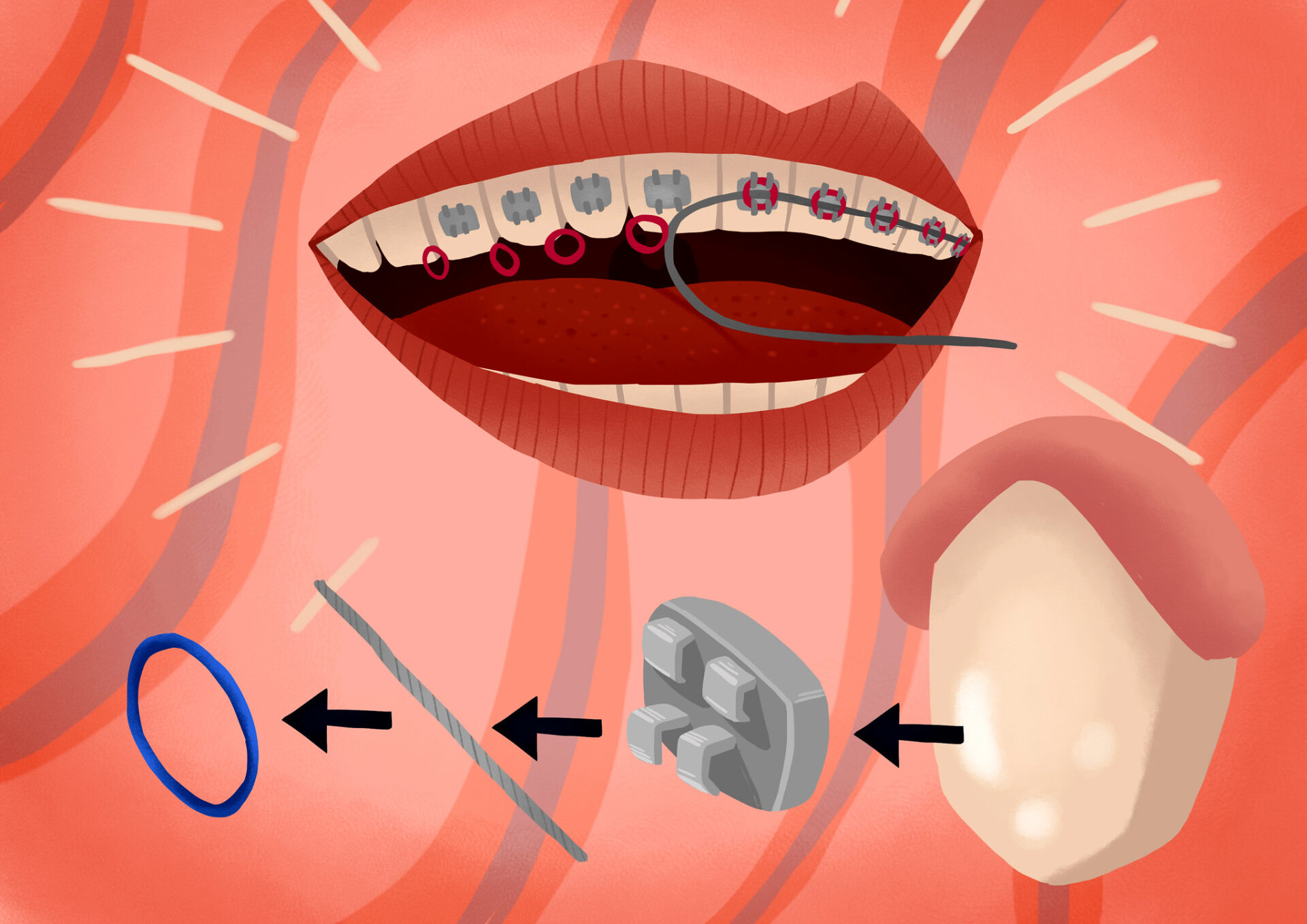
Once the brackets are attached, we fit the archwire through them and secure it with elastic ties or the brackets’ clips. The wire applies the pressure that gradually moves the teeth. Depending on your plan, back teeth can have bands, and some patients also need bite supports or other attachments.
Before you leave, we check the wire ends and show you any parts you’ll manage at home. If you need rubber bands, you’ll practice placing them. It’s much easier to work out where they go with us beside you than while squinting into the bathroom mirror later.
What the First Few Days Feel Like
Your teeth can feel fine when you leave and complain about dinner a few hours later. Biting puts pressure on teeth that have just started moving, so even a sandwich can feel like more work than expected. For the first few days, choose foods you can chew comfortably and let the tenderness settle.
Your cheeks and lips need an adjustment period too. If a bracket rubs, dry it with a clean tissue and press orthodontic wax over the spot. We’ll demonstrate that before you leave and review pain-relief options that fit your health history.
A poking wire or loose bracket needs a call. Likewise, pain that’s severe, worsening, or different from what we described should be checked. You shouldn’t have to spend the week trying to work around a piece of hardware that needs an adjustment.
Cleaning Around Braces
With braces, a quick brush before bed can leave half of dinner still tucked around the brackets. Start above and below the brackets, then brush along the gumline, backs of the teeth, and chewing surfaces. Afterward, check the mirror for anything still tucked behind a wire.
Cleaning between teeth takes another tool, such as a floss threader or orthodontic floss. Small interdental brushes help around brackets and beneath wires, and a water flosser can be part of the routine too. We’ll show you how to use the tools around your braces so you know what each one is meant to reach.
These extra minutes help prevent swollen gums, cavities, and the dreaded white spots around brackets. Those chalky marks develop when plaque acids repeatedly weaken the enamel. Since the marks can remain after braces come off, daily cleaning protects the smile you’re working toward.
Eating and Wearing Elastics
Avoid chewing ice, hard candy, and sticky foods that pull on brackets. Instead, cut firm foods such as apples into small pieces and chew them with your back teeth. A loose bracket interrupts treatment and usually means another visit to put things back in place.
If elastics are prescribed, follow the placement and wear schedule exactly. Adding extra bands or doubling them up can apply the wrong forces. If you forget the instructions, contact us so we can help you get back on track.
Start Braces at Pearls Orthodontics
By the end of placement day, you’ll know how to clean your braces, cover a rubbing bracket, and handle those first meals. Our bilingual team can explain your instructions in English or Spanish, and Dr. Ortiz will check your progress as treatment continues. Schedule a visit with Dr. Ortiz at Pearls Orthodontics in Pflugerville, and bring every braces question on your list!
Image from Authority Dental under CC 2.0
Categorised in: Orthodontic FAQ